
Financial Strain
How could financial strain affect your heart, your head and increase your vulnerability in men?

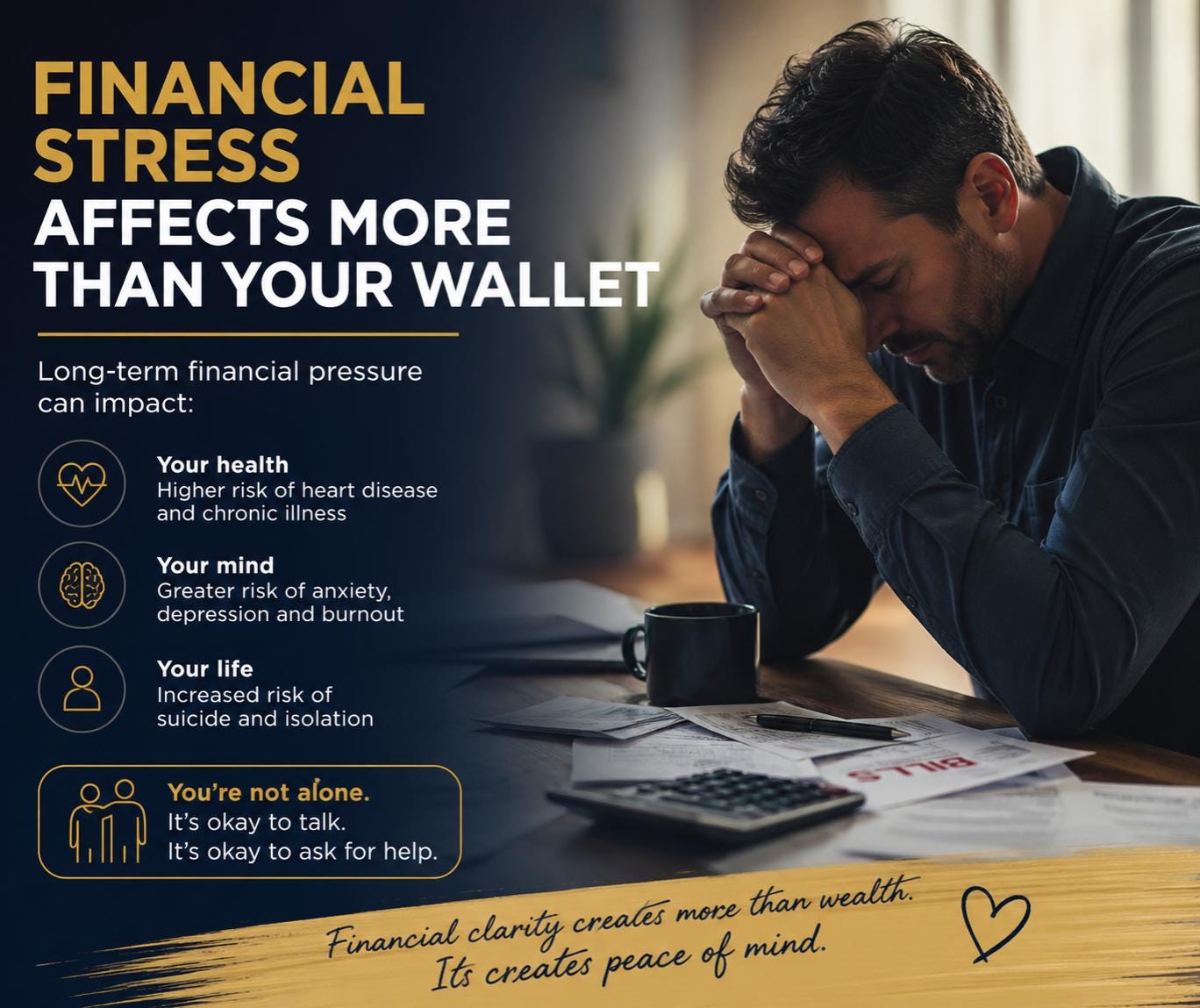
Most people think financial stress is just part of life. Something you push through.
Something you deal with quietly. But the truth is, it runs deeper than most of us realise.
Financial stress doesn’t only affect your bank account. It affects your health, your thinking, our relationships and in some cases, even your will to keep going.
That sounds heavy. But it’s worth understanding.
The Hidden Cost of Financial Pressure
When money is tight, uncertain, or under pressure, your body doesn’t treat it as a small issue.
It treats it as a threat and not a short-term one.
For many people, financial pressure is constant. It sits in the background of daily life. Every decision, every bill, every unexpected expense adds to it. Over time, your body stays in a state of stress.
Your heart rate increases.
Your blood pressure rises.
Your sleep suffers.
Your mind also starts to change, you worry more, you feel overwhelmed more easily.
You lose clarity and focus.
Your system is trying to protect you. But when the stress doesn’t switch off, it starts to wear you down instead.
Why This Matters More Than You Think
There is a growing body of research showing that long-term financial stress is linked to serious health outcomes, not just anxiety or burnout, but things like heart disease and even increased risk of suicide.
This is where it becomes important to pause, because most financial conversations focus on returns, products, and performance.
Very few focus on the human cost of financial pressure.
The Pressure Many People Don’t Talk About
Men are hit particulary hard, not because they are weaker, but because of how they’ve been taught to carry pressure.
Many men grow up believing they must provide, they must figure things out and they must not show struggle.
So when financial pressure builds, it becomes personal and it’s no longer just about money.
It feels like a reflection of who you are and if things go wrong, it can feel like failure.
Not just financially, but as a person.
For me, asking for help feels uncomfortable, many carry it alone. That’s where things can become dangerous.
The Spiral That Can Happen
When financial stress builds and stays unspoken, a few things tend to happen.
You start to avoid looking at your numbers.
You delay decisions.
You hope things will just improve.
At the same time, your stress levels increase.
When pressure and isolation combine, it becomes harder to see a way forward and in my opinion and experience, that’s the real risk.
Not just the money problem itself. But how it affects your ability to respond to it.
Financial Planning Done Properly
This is why I believe financial planning is about far more than money, it is about people and emotionals and thoughts.
At its core, good financial planning should reduce stress. It should bring clarity.
Sometimes the biggest value is not earning an extra percentage point, or reducing fees, or reviewing your insurance.
It’s being able to sleep at night, it’s knowing there is a plan, it’s feeling like you are in control again and it is knowing you have a partner to navigate this journey with.
MEN! You Don’t Have to Carry It Alone
This is probably the most important part!
Financial stress thrives in silence and tt grows when it’s hidden.
When you talk about it, it softens and you start to feel like you can handle what is happening. That doesn’t mean you need to tell everyone everything.
What it means is finding the right space with the right people who know how to help and provide the clarity and certainty. The right conversation, with a Certified Financial Planning Professional, can make all the difference.
Money is important. Sure, I get it, but your health, your clarity, and your peace of mind matter more and good financial planning should support all of that.